
Introduction
Cybersecurity has become a major concern for businesses, governments, and individuals. Every day, cybercriminals attempt to steal data, spread malware, compromise accounts, and disrupt critical systems. As technology advances, cyber threats become more sophisticated and difficult to detect using traditional security methods alone.
FOR MORE SOLUTIONS VISIT
Many organizations struggle to keep up with the growing number of attacks. Security teams often face thousands of alerts daily, making it challenging to identify genuine threats before damage occurs. At the same time, remote work, cloud computing, and connected devices have expanded the number of potential entry points for attackers.
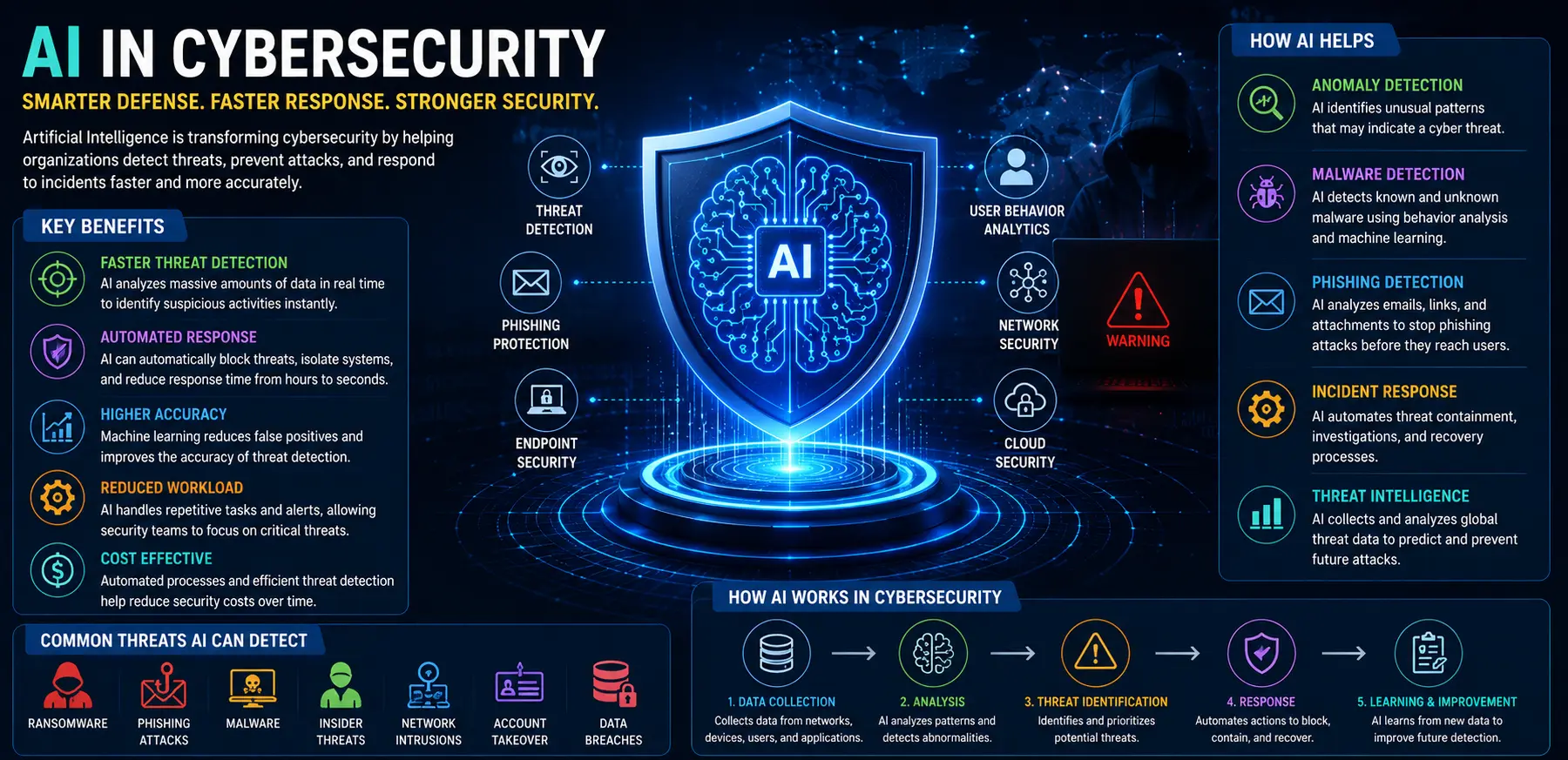
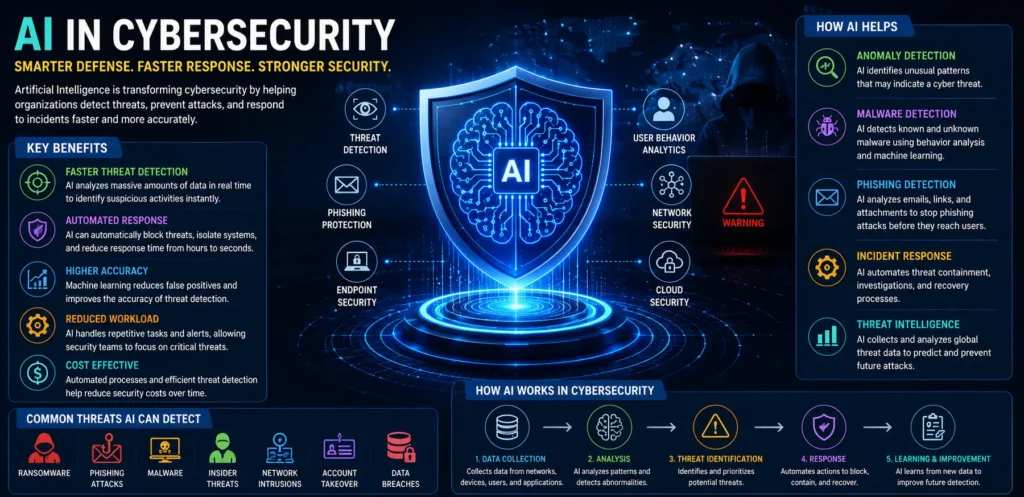
This is where AI in Cybersecurity is making a significant impact. Artificial intelligence helps security systems analyze massive amounts of data, detect suspicious behavior, automate responses, and improve overall protection. By combining machine learning, automation, and advanced analytics, AI enables organizations to identify threats faster and reduce the risk of costly security incidents.
This guide explains the causes of modern cybersecurity challenges, practical solutions powered by AI, advanced security techniques, and tips for maintaining stronger protection.
Main Causes of Cybersecurity Challenges
Understanding why cybersecurity problems continue to grow helps explain the increasing importance of AI-powered security solutions.
1. Rapid Growth of Cyber Threats
Cybercriminals constantly develop new attack methods. Businesses face threats such as:
- Phishing attacks
- Ransomware
- Data breaches
- Credential theft
- Network intrusions
The sheer volume of attacks makes manual monitoring difficult.
2. Increasing Amounts of Data
Modern organizations generate enormous amounts of data through:
- Cloud services
- Applications
- Networks
- Mobile devices
- Internet-connected systems
Analyzing this data manually is almost impossible, creating opportunities for threats to remain hidden.
3. Human Error
Many cybersecurity incidents result from simple mistakes.
Common examples include:
- Clicking malicious links
- Using weak passwords
- Sharing sensitive information
- Misconfiguring software
Even experienced employees can unintentionally create security risks.
4. Shortage of Security Professionals
Cybersecurity experts are in high demand worldwide.
Many organizations struggle to hire enough skilled professionals to monitor systems around the clock, leaving security gaps that attackers can exploit.
5. Evolving Attack Techniques
Traditional security tools often rely on predefined rules or known threat signatures.
Modern attackers frequently modify their techniques to avoid detection, making conventional defenses less effective.
Step-by-Step Solutions Using AI in Cybersecurity
Artificial intelligence provides practical solutions for addressing many of today’s cybersecurity challenges.
Step 1: Implement AI-Powered Threat Detection
The first step is deploying AI systems capable of continuously monitoring security activity.
These systems analyze:
- User behavior
- Network traffic
- Device activity
- Application logs
AI can quickly identify unusual patterns that may indicate a cyberattack.
For example, if an employee account suddenly accesses sensitive files from an unfamiliar location, the system can generate an alert.
Step 2: Use Machine Learning for Malware Detection
Traditional antivirus software focuses on known malware signatures.
AI-powered security tools can analyze file behavior and identify previously unknown threats.
Benefits include:
- Detecting zero-day attacks
- Identifying ransomware activity
- Recognizing suspicious applications
- Reducing false positives
This improves protection against evolving malware threats.
Step 3: Strengthen Email Security
Email remains one of the most common attack methods.
AI-based email security platforms can:
- Detect phishing attempts
- Analyze suspicious links
- Scan attachments
- Identify fraudulent sender behavior
By blocking malicious emails before they reach users, organizations can significantly reduce security risks.
Step 4: Monitor User Behavior
Artificial intelligence can learn normal user activity patterns.
Once a baseline is established, the system can detect:
- Unusual login attempts
- Excessive file downloads
- Unauthorized access requests
- Suspicious account activity
Behavior-based detection often reveals threats that traditional tools miss.
Step 5: Automate Incident Response
Quick action is critical during a cyberattack.
Many AI security platforms can automatically:
- Block malicious IP addresses
- Isolate infected devices
- Disable compromised accounts
- Restrict unauthorized access
Automation reduces response times and minimizes damage.
Step 6: Enable Continuous Security Monitoring
AI systems operate continuously without fatigue.
They monitor:
- Endpoints
- Servers
- Networks
- Cloud environments
- Applications
Continuous monitoring improves threat visibility and helps organizations identify attacks before they escalate.
Advanced Fixes for Enhanced Cybersecurity
Organizations looking to strengthen security further can implement advanced AI-driven solutions.
User and Entity Behavior Analytics (UEBA)
UEBA uses artificial intelligence to analyze the behavior of users, devices, and systems.
This approach helps identify:
- Insider threats
- Compromised accounts
- Privilege abuse
- Unauthorized activities
Because UEBA focuses on behavior rather than known attack signatures, it can detect previously unseen threats.
Predictive Threat Intelligence
AI can analyze historical attack data and external threat intelligence sources to predict future risks.
This allows organizations to:
- Anticipate attack trends
- Prioritize security investments
- Address vulnerabilities proactively
Predictive analysis shifts security efforts from reactive to preventive.
Security Orchestration and Automation
Security orchestration platforms integrate multiple security tools into a centralized workflow.
AI can automate processes such as:
- Threat detection
- Evidence collection
- Risk assessment
- Response execution
- Incident reporting
This improves efficiency while reducing workload for security teams.
AI-Powered Vulnerability Management
Organizations often struggle to manage thousands of vulnerabilities.
AI-based vulnerability management tools can:
- Prioritize critical weaknesses
- Recommend remediation actions
- Predict likely attack paths
- Improve patch management
This ensures the most serious risks receive immediate attention.
Deep Learning Security Models
Deep learning technologies can identify complex patterns that traditional systems may overlook.
Applications include:
- Fraud detection
- Advanced malware analysis
- Network anomaly detection
- Identity verification
As these models process more data, their accuracy improves over time.
Tips to Prevent Cybersecurity Issues
While AI significantly improves security, organizations should combine it with strong cybersecurity practices.
Use Multi-Factor Authentication
Multi-factor authentication adds an extra layer of protection.
Even if attackers obtain passwords, they may still be unable to access accounts without additional verification.
Keep Systems Updated
Regular updates help close security vulnerabilities before attackers can exploit them.
Update:
- Operating systems
- Applications
- Browsers
- Security software
Prompt patching remains one of the simplest ways to improve security.
Train Employees Frequently
Employee awareness plays a major role in cybersecurity.
Training should cover:
- Phishing awareness
- Password management
- Safe internet usage
- Data protection practices
Educated users are less likely to fall victim to cyberattacks.
Limit User Permissions
Provide employees with only the access they need to perform their jobs.
The principle of least privilege reduces the potential impact of compromised accounts.
Back Up Critical Data
Regular backups help organizations recover from:
- Ransomware attacks
- Hardware failures
- Accidental deletions
- Data corruption
Test backup systems periodically to ensure successful recovery when needed.
Combine AI and Human Expertise
Artificial intelligence improves efficiency, but human oversight remains essential.
Security professionals are needed to:
- Investigate alerts
- Make strategic decisions
- Handle complex incidents
- Evaluate emerging threats
The best cybersecurity programs combine AI capabilities with experienced security teams.
FAQs
What is AI in Cybersecurity?
AI in Cybersecurity refers to the use of artificial intelligence and machine learning technologies to detect threats, analyze security data, automate responses, and improve overall cyber defense capabilities.
How does AI help detect cyber threats?
AI analyzes large volumes of data, learns normal activity patterns, and identifies unusual behavior that may indicate malicious activity, allowing threats to be detected more quickly.
Can AI replace cybersecurity professionals?
No. AI supports cybersecurity teams by automating repetitive tasks and improving threat detection, but human experts are still necessary for investigations, decision-making, and security planning.
Is AI cybersecurity suitable for small businesses?
Yes. Many modern AI-powered security solutions are designed for organizations of all sizes and can help small businesses improve security without maintaining large security teams.
What are the main benefits of AI in Cybersecurity?
Key benefits include:
- Faster threat detection
- Automated incident response
- Improved accuracy
- Reduced false positives
- Better protection against evolving threats
Conclusion
Cybersecurity threats continue to increase in complexity, making traditional defenses alone insufficient for many organizations. AI in Cybersecurity provides a powerful solution by improving threat detection, automating responses, analyzing behavior, and enhancing overall security operations.
Organizations that combine AI-powered security tools with employee training, strong security policies, regular updates, and expert oversight can significantly reduce their exposure to cyber risks. As cyber threats continue to evolve, artificial intelligence will play an increasingly important role in helping businesses and individuals protect their systems, data, and digital assets.
- AI Powered Cyber Defense How Artificial Intelligence Strengthens Modern Cybersecurity
- Machine Learning in Cybersecurity How Intelligent Systems Help Detect and Prevent Cyber Threats
- AI in Cybersecurity How Artificial Intelligence Is Transforming Digital Security
- AI Threat Detection How Artificial Intelligence Helps Stop Cyber Threats Before They Cause Damage
- Artificial Intelligence Security Solutions A Practical Guide to Smarter Cyber Protection
