
Introduction
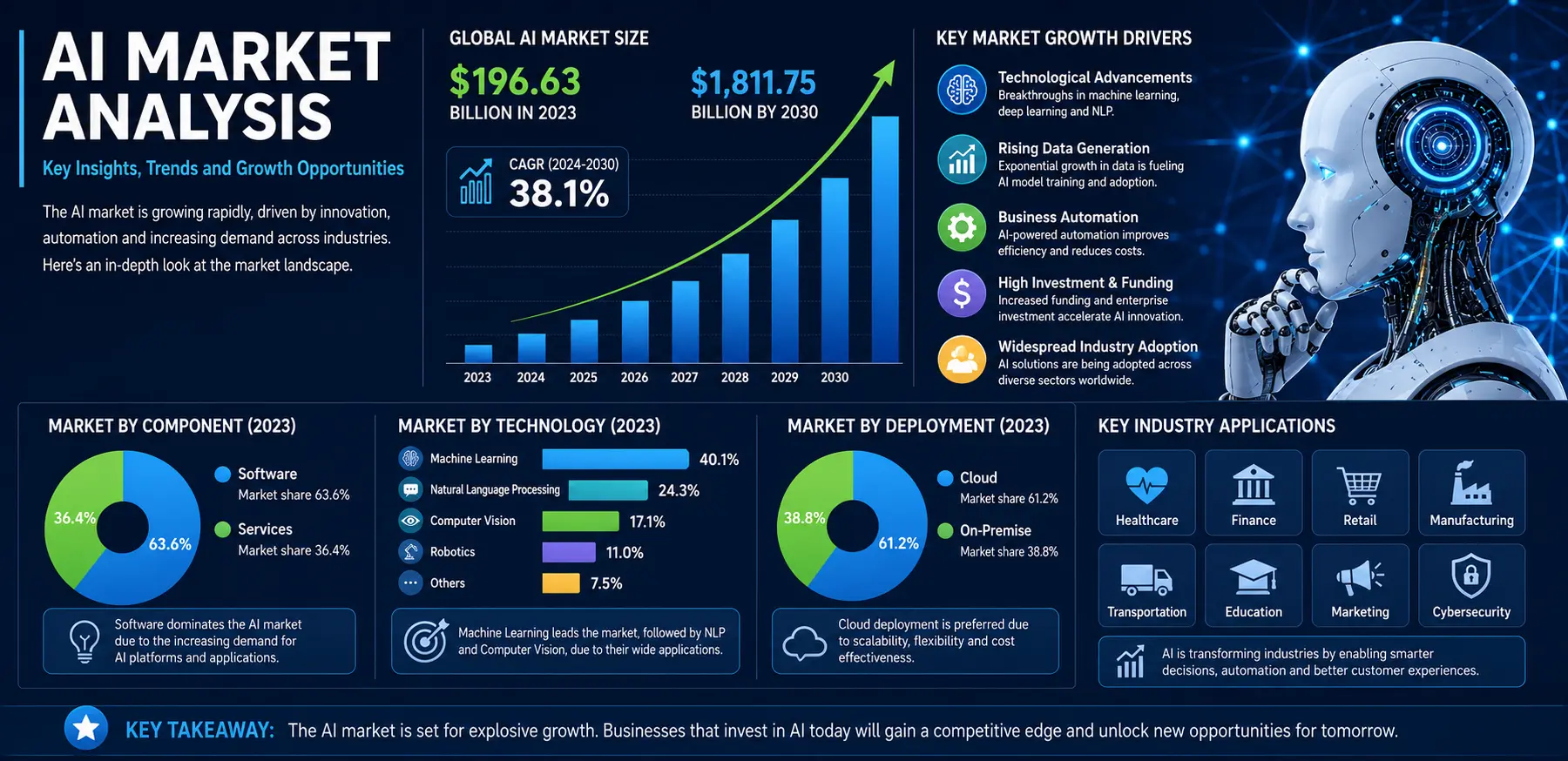
Artificial intelligence has become one of the fastest-growing sectors in the global economy. Businesses of all sizes are investing in AI tools to automate tasks, improve decision-making, enhance customer experiences, and increase productivity. As a result, the AI industry continues to attract significant attention from investors, entrepreneurs, technology leaders, and policymakers.
Despite this rapid growth, many businesses struggle to understand the market properly. They often face challenges when evaluating AI opportunities, identifying profitable investments, or predicting future trends. Without accurate information, companies may spend resources on technologies that fail to deliver meaningful results.
This is where AI Market Analysis becomes important. A well-structured market analysis helps businesses understand industry trends, customer demands, competitive landscapes, and future opportunities. It allows organizations to make informed decisions rather than relying on assumptions.
This article explains the key factors driving the AI market, practical ways to analyze it effectively, and strategies businesses can use to stay ahead of the competition.
Main Causes Behind AI Market Growth
Several factors are contributing to the rapid expansion of the artificial intelligence market.
1. Increasing Demand for Automation
Organizations are constantly looking for ways to reduce costs and improve efficiency.
AI-powered automation can handle repetitive tasks such as data entry, customer support, scheduling, and document processing. This reduces manual workloads and allows employees to focus on higher-value activities.
As businesses seek greater efficiency, demand for AI solutions continues to rise.
2. Growth in Data Generation
Every day, businesses generate massive amounts of data from websites, mobile applications, customer interactions, sensors, and digital transactions.
AI systems require large datasets to learn patterns and generate insights. The growing availability of data has made AI applications more accurate and effective across various industries.
3. Advancements in Computing Technology
Powerful processors, cloud computing services, and specialized AI hardware have made artificial intelligence more accessible.
Companies no longer need expensive infrastructure to develop and deploy AI solutions. Cloud-based AI platforms allow organizations to access advanced capabilities with lower upfront costs.
4. Increased Business Investment
Private investors, venture capital firms, and major technology companies continue to invest heavily in AI development.
This investment supports research, innovation, product development, and market expansion, creating new opportunities across multiple industries.
5. Expanding Industry Applications
Artificial intelligence is no longer limited to the technology sector.
Today, AI is widely used in:
- Healthcare
- Finance
- Retail
- Manufacturing
- Education
- Logistics
- Marketing
- Customer service
As more industries discover practical uses for AI, market growth accelerates.
Step-by-Step Solutions for Conducting Effective AI Market Analysis
Businesses that want to succeed in the AI sector need a structured approach to market analysis.
Step 1: Identify Market Segments
The AI market consists of multiple categories and industries.
Common segments include:
- Machine learning platforms
- Generative AI tools
- Natural language processing
- Computer vision
- AI-powered automation
- Predictive analytics
Understanding which segment aligns with your goals helps narrow the focus of your analysis.
Step 2: Study Industry Trends
Monitoring emerging trends provides valuable insights into future opportunities.
Some current trends include:
- Generative AI adoption
- AI-assisted software development
- Personalized customer experiences
- AI cybersecurity solutions
- Industry-specific AI applications
Trend analysis helps businesses anticipate market changes before they occur.
Step 3: Analyze Competitors
Competitor research reveals strengths, weaknesses, and market positioning.
Evaluate factors such as:
- Product offerings
- Pricing models
- Customer reviews
- Market share
- Innovation strategies
This information helps identify gaps that your business can potentially fill.
Step 4: Understand Customer Needs
Successful AI products solve real problems.
Gather customer feedback through:
- Surveys
- Interviews
- Support tickets
- Online reviews
- Social media discussions
Understanding customer pain points allows businesses to develop more valuable solutions.
Step 5: Evaluate Market Size and Growth Potential
Estimate the total market opportunity by examining:
- Industry reports
- Revenue forecasts
- Adoption rates
- Regional demand
- Investment activity
These metrics help determine whether a market is large enough to support long-term growth.
Step 6: Monitor Regulatory Developments
Governments worldwide are introducing regulations related to AI usage, privacy, and transparency.
Businesses should stay informed about legal requirements that could impact product development and market access.
Key AI Market Trends to Watch
Several important trends are currently shaping the AI industry.
Generative AI Expansion
Generative AI has become one of the most talked-about areas within the market.
Organizations are using generative AI to:
- Create content
- Generate software code
- Design marketing materials
- Improve customer support
The demand for these tools continues to grow across industries.
AI Integration Into Existing Software
Rather than purchasing standalone AI platforms, many businesses prefer AI features integrated into software they already use.
This trend is driving innovation in:
- Productivity software
- Customer relationship management systems
- Business intelligence tools
- Enterprise applications
Rise of Industry-Specific AI Solutions
Generic AI tools often fail to address specialized business requirements.
As a result, companies are developing AI systems tailored to industries such as healthcare, finance, legal services, and manufacturing.
These specialized solutions often provide greater accuracy and business value.
Focus on Responsible AI
Organizations are increasingly prioritizing ethical AI practices.
Key concerns include:
- Bias reduction
- Data privacy
- Transparency
- Accountability
- Security
Responsible AI frameworks are becoming essential for maintaining trust and regulatory compliance.
AI and Cybersecurity Growth
Cybersecurity remains a major concern for organizations worldwide.
AI-powered security tools help identify threats, detect unusual activity, and respond more quickly to attacks.
As cyber threats evolve, AI-driven security solutions are expected to see continued demand.
Advanced Fixes for Better Market Analysis
Businesses seeking a deeper understanding of the AI market can use advanced strategies.
Use Predictive Analytics
Predictive analytics combines historical data with machine learning models to forecast future market behavior.
This approach helps businesses:
- Anticipate demand
- Identify emerging opportunities
- Reduce uncertainty
- Improve strategic planning
Track Venture Capital Activity
Investment patterns often reveal where the market is heading.
Monitoring venture capital funding can highlight:
- Emerging technologies
- High-growth startups
- New market segments
- Innovation hotspots
This information provides early indicators of future trends.
Analyze Patent Filings
Patent activity offers insights into research and development efforts.
A surge in patent filings within a specific area may indicate upcoming technological advancements and competitive shifts.
Build Industry Partnerships
Collaborating with research institutions, technology providers, and industry associations can provide access to valuable market intelligence.
Partnerships often help businesses identify opportunities before they become widely recognized.
Tips to Prevent Common AI Market Analysis Mistakes
Even experienced businesses can make errors when evaluating AI opportunities.
Avoid Following Hype Alone
Not every trending technology delivers long-term value.
Focus on practical applications, customer demand, and measurable business outcomes rather than media attention.
Use Multiple Data Sources
Relying on a single report or publication can lead to inaccurate conclusions.
Compare information from several trusted sources to gain a more balanced perspective.
Update Research Regularly
The AI market changes rapidly.
Review industry developments frequently to ensure decisions are based on current information.
Focus on Customer Value
Technology alone does not guarantee success.
Businesses should prioritize solutions that solve real customer problems and deliver measurable benefits.
Consider Long-Term Scalability
When evaluating AI opportunities, consider whether the technology can support future growth.
Scalable solutions often provide better returns over time.
FAQs
What is AI Market Analysis?
AI Market Analysis is the process of studying the artificial intelligence industry to understand trends, customer demand, competitors, growth opportunities, and future market potential.
Why is AI Market Analysis important?
It helps businesses make informed decisions, identify opportunities, reduce risks, and allocate resources more effectively.
Which industries are driving AI market growth?
Healthcare, finance, retail, manufacturing, logistics, education, and cybersecurity are among the leading sectors adopting AI technologies.
How fast is the AI market growing?
The AI market continues to experience strong global growth due to increasing adoption, technological advancements, and rising business investments.
What are the biggest challenges in AI market analysis?
Common challenges include rapidly changing technology, evolving regulations, competitive pressure, data limitations, and predicting future adoption trends.
Conclusion
The artificial intelligence industry continues to expand as businesses seek smarter ways to improve efficiency, reduce costs, and gain competitive advantages. Conducting a thorough AI Market Analysis helps organizations understand market conditions, identify profitable opportunities, and prepare for future developments.
Successful market analysis requires a combination of trend monitoring, competitor research, customer insights, regulatory awareness, and data-driven decision-making. Businesses that invest time in understanding the AI landscape are better positioned to adapt to change and capitalize on emerging opportunities.
As AI technology continues to evolve, staying informed and maintaining a strategic approach will remain essential for long-term success in this rapidly growing market.
- Future of Artificial Intelligence Industry Trends Opportunities and Challenges Ahead
- Enterprise AI Solutions How Businesses Use Artificial Intelligence to Improve Efficiency and Growth
- AI Automation in the Workplace Benefits Challenges and Practical Implementation Strategies
- Generative AI Business Applications How Companies Are Using AI to Improve Productivity and Growth
- Artificial Intelligence Trends 2026 Key Innovations Shaping the Future
