
Introduction
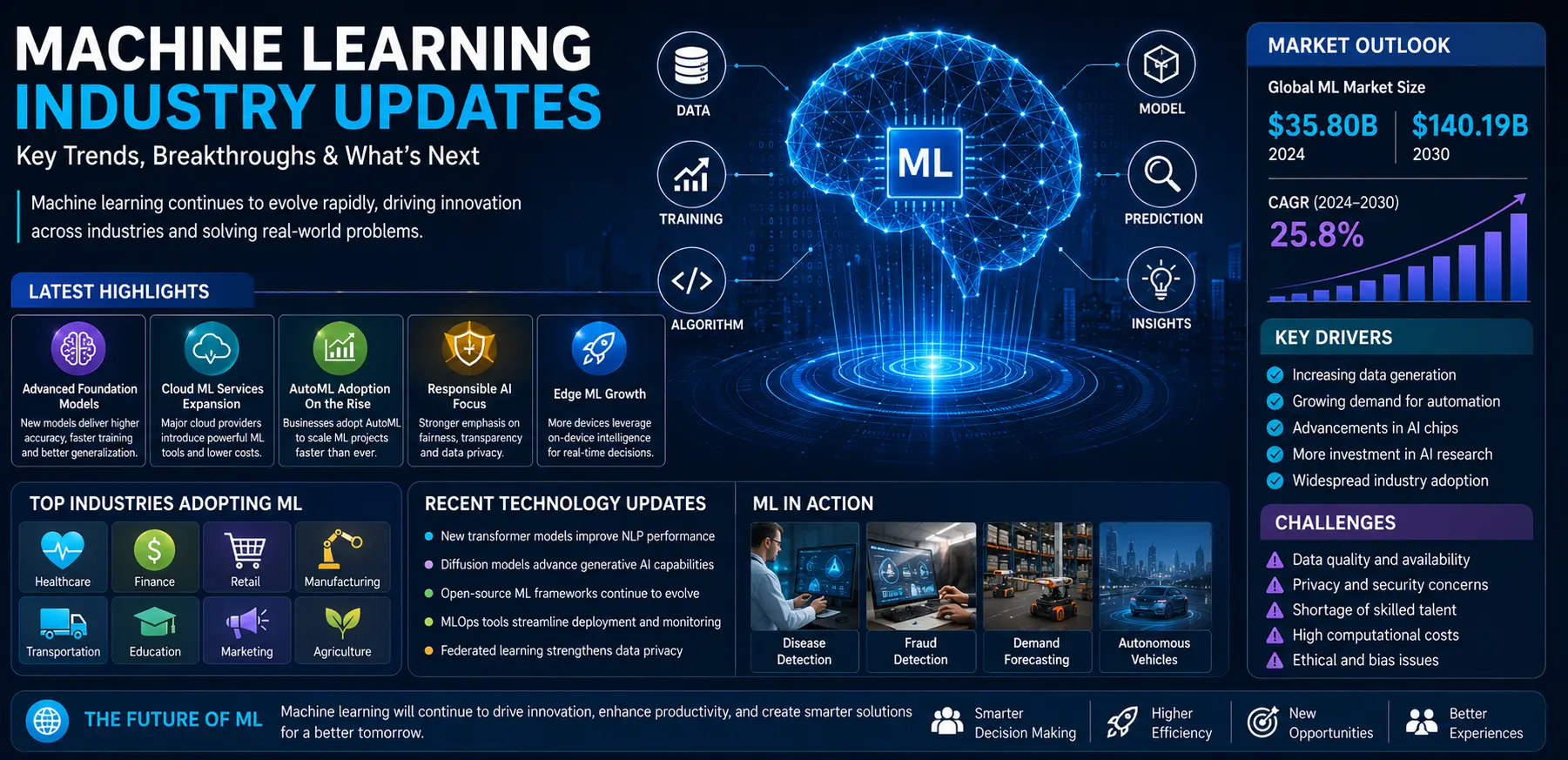
Machine learning has become one of the most influential technologies in modern business and technology. From recommendation systems on streaming platforms to fraud detection in banking and predictive maintenance in manufacturing, machine learning is transforming how organizations operate and make decisions.
The challenge is that the industry evolves quickly. New algorithms, tools, regulations, and business applications appear regularly. Companies, professionals, and investors often struggle to keep up with the latest developments. Missing important updates can lead to lost opportunities, outdated strategies, and reduced competitiveness.
Understanding Machine Learning Industry Updates helps businesses stay informed, identify emerging trends, and make smarter decisions about technology investments. Whether you are a business owner, student, technology enthusiast, or industry professional, staying updated can provide valuable insights into where the market is heading and how machine learning is shaping the future.
Main Causes Behind Rapid Changes in the Machine Learning Industry
Several factors are driving continuous growth and innovation within the machine learning sector.
1. Increased Availability of Data
Businesses generate enormous amounts of data every day through websites, mobile apps, sensors, customer interactions, and transactions.
Machine learning models depend on data to learn patterns and improve predictions. As data availability increases, organizations can build more accurate and effective solutions.
2. Advances in Computing Infrastructure
Powerful processors, cloud computing platforms, and specialized AI hardware have significantly improved machine learning capabilities.
Tasks that once required expensive infrastructure can now be performed using cloud-based services, making machine learning accessible to organizations of all sizes.
3. Growing Business Demand
Companies are constantly searching for ways to improve efficiency, reduce costs, and gain competitive advantages.
Machine learning supports these goals through:
- Predictive analytics
- Process automation
- Customer insights
- Risk management
- Operational optimization
As demand grows, innovation accelerates.
4. Increased Investment in Research
Technology companies, research institutions, and investors continue to invest billions of dollars into machine learning development.
These investments drive breakthroughs in model performance, software tools, and real-world applications.
5. Expansion Across Industries
Machine learning is no longer limited to technology companies.
Industries actively adopting machine learning include:
- Healthcare
- Finance
- Retail
- Manufacturing
- Transportation
- Education
- Agriculture
This widespread adoption creates new use cases and fuels industry growth.
Step-by-Step Solutions for Staying Updated With Machine Learning Industry Updates
Keeping up with industry developments does not require technical expertise. A structured approach can help anyone stay informed.
Step 1: Follow Trusted Industry Sources
Start by identifying reliable publications and organizations that regularly report on machine learning developments.
Good sources include:
- Research institutions
- Technology news websites
- Academic journals
- Industry reports
- Official company blogs
Reliable information helps separate meaningful developments from marketing hype.
Step 2: Monitor Major Technology Companies
Large technology firms often lead machine learning innovation.
Following announcements from major companies can provide insights into:
- New models
- Software updates
- Industry partnerships
- Research breakthroughs
- Product launches
These developments often influence broader market trends.
Step 3: Learn Basic Machine Learning Concepts
A basic understanding of machine learning makes industry updates easier to understand.
Key topics include:
- Supervised learning
- Unsupervised learning
- Neural networks
- Deep learning
- Predictive analytics
Even beginner-level knowledge can significantly improve comprehension.
Step 4: Track Industry Applications
Rather than focusing only on technical developments, pay attention to real-world business applications.
Look for examples of machine learning being used in:
- Customer service
- Healthcare diagnostics
- Supply chain management
- Marketing optimization
- Financial forecasting
Practical applications often reveal where the industry is generating the most value.
Step 5: Attend Webinars and Industry Events
Many organizations host online events discussing current machine learning trends.
Benefits include:
- Expert insights
- Networking opportunities
- Market forecasts
- Product demonstrations
- Educational sessions
These events often provide information that has not yet reached mainstream media.
Major Machine Learning Industry Updates Shaping the Market
Several trends are currently influencing the direction of the machine learning industry.
Generative AI and Large Language Models
Generative AI has become one of the most significant developments in machine learning.
These systems can generate:
- Text
- Images
- Videos
- Audio
- Software code
Businesses are increasingly integrating generative AI into customer service, marketing, content creation, and software development workflows.
Automated Machine Learning (AutoML)
AutoML platforms simplify machine learning development by automating tasks such as:
- Data preparation
- Model selection
- Parameter tuning
- Performance evaluation
This trend makes machine learning more accessible to non-technical users and smaller organizations.
Industry-Specific Machine Learning Solutions
Organizations are moving away from generic tools and adopting specialized solutions designed for specific sectors.
Examples include:
- Medical diagnosis systems
- Financial fraud detection
- Manufacturing quality control
- Agricultural crop monitoring
Industry-focused solutions often provide higher accuracy and better business outcomes.
Responsible and Ethical Machine Learning
Concerns about fairness, transparency, and privacy continue to grow.
Organizations are implementing practices that focus on:
- Bias detection
- Explainable models
- Data protection
- Compliance monitoring
- Ethical governance
Responsible machine learning is becoming an essential business requirement.
Edge Machine Learning
Instead of processing data in remote cloud environments, edge machine learning performs analysis directly on devices.
Common examples include:
- Smart cameras
- Mobile devices
- Industrial sensors
- Connected vehicles
This approach improves speed, reduces latency, and enhances privacy.
Advanced Fixes for Long-Term Success
Organizations looking to maximize the value of machine learning can explore more advanced strategies.
Build Internal Machine Learning Expertise
Relying entirely on external vendors may limit flexibility.
Developing an internal team can improve innovation and long-term competitiveness.
Important roles may include:
- Data scientists
- Machine learning engineers
- Data analysts
- AI product managers
Establish Data Governance Policies
Successful machine learning projects require high-quality data.
Organizations should create policies covering:
- Data collection
- Data security
- Access controls
- Data accuracy
- Compliance requirements
Strong governance improves model reliability and reduces risk.
Implement Continuous Model Monitoring
Machine learning models can become less accurate over time due to changing conditions.
Regular monitoring helps organizations:
- Detect performance issues
- Identify bias
- Improve accuracy
- Maintain compliance
Ongoing evaluation ensures models continue delivering value.
Combine Human Expertise With Machine Learning
The most effective solutions often involve collaboration between humans and machines.
Human oversight helps validate results, manage risks, and provide context that algorithms may not fully understand.
Tips to Prevent Common Machine Learning Challenges
Many organizations encounter avoidable problems when implementing machine learning solutions.
Focus on Clear Business Goals
Technology should support specific business objectives.
Define measurable goals before launching machine learning projects.
Examples include:
- Reducing operational costs
- Improving customer retention
- Increasing forecasting accuracy
Prioritize Data Quality
Poor data leads to poor results.
Invest in data cleaning, validation, and maintenance to improve model performance.
Avoid Unrealistic Expectations
Machine learning can deliver significant benefits, but it is not a solution for every problem.
Evaluate potential projects carefully and focus on realistic outcomes.
Keep Teams Educated
Continuous learning helps employees adapt to changing technologies and industry practices.
Training programs improve adoption and reduce resistance to new systems.
Stay Updated on Regulations
Machine learning regulations continue to evolve globally.
Organizations should monitor legal developments to ensure compliance and reduce risk.
FAQs
What are Machine Learning Industry Updates?
Machine Learning Industry Updates refer to the latest developments, trends, technologies, research breakthroughs, regulations, and business applications related to machine learning.
Why is machine learning important for businesses?
Machine learning helps businesses improve efficiency, automate tasks, analyze data, predict outcomes, and enhance customer experiences.
Which industries use machine learning the most?
Healthcare, finance, retail, manufacturing, logistics, cybersecurity, and marketing are among the leading industries adopting machine learning solutions.
What is AutoML?
AutoML, or Automated Machine Learning, is technology that automates many aspects of machine learning development, making it easier for non-experts to build models.
How can beginners stay updated on machine learning trends?
Beginners can follow trusted news sources, read industry reports, attend webinars, take online courses, and monitor announcements from major technology companies.
Conclusion
The machine learning industry continues to evolve rapidly, creating new opportunities for businesses, professionals, and investors. Keeping up with Machine Learning Industry Updates helps organizations understand emerging technologies, identify growth opportunities, and make informed strategic decisions.
Key trends such as generative AI, AutoML, industry-specific solutions, ethical machine learning, and edge computing are reshaping the market. Organizations that invest in learning, data quality, governance, and ongoing innovation will be better positioned for long-term success.
As machine learning becomes increasingly integrated into everyday business operations, staying informed is no longer optional. It is a valuable step toward remaining competitive in a constantly changing technology landscape.
- Future of Artificial Intelligence Industry Trends Opportunities and Challenges Ahead
- Enterprise AI Solutions How Businesses Use Artificial Intelligence to Improve Efficiency and Growth
- AI Automation in the Workplace Benefits Challenges and Practical Implementation Strategies
- Generative AI Business Applications How Companies Are Using AI to Improve Productivity and Growth
- Artificial Intelligence Trends 2026 Key Innovations Shaping the Future
